UITGELICHT ARTIKEL
5 manieren hoe je dembrane kunt gebruiken om je dialoogproces te ondersteunen
dembrane is een set bouwstenen die we hebben gemaakt om dialoogprocessen te ondersteunen: pak de bouwstenen die je nodig hebt en laat de rest liggen. In de basis is het een archivaris: leg het hele proces vast zonder dat je hoeft te veranderen hoe je begeleidt, en je hebt al een controleerbaar spoor en een geheugen. Alles daarboven is een optionele feedbackloop die op een strakkere, snellere cyclus draait dan de loop eronder. De laatste loop is opt-in, draait juist de andere kant op en bundelt wat er over processen heen geleerd is.
Hoe je deze kaart gebruikt
Loop met je procesontwerp langs de vijf lagen en geef per laag aan of die zijn plek verdient, en zet dan alleen de functies aan die je nodig hebt. Alleen de laag waarin je vastlegt is op zichzelf al de moeite waard; de strakkere loops staan klaar voor het moment dat erom vraagt; de commons is er als je ooit kiest om te delen.
De vijf lagen
| Laag | Wat het doet | Hoe reageren deelnemers? | Wat veranderd er? |
|---|---|---|---|
| 1: VASTLEGGENHet hele proces | Maakt van een willekeurig aantal telefoons een veilig archiefsysteem: elk gesprek getranscribeerd, doorzoekbaar, controleerbaar. | De meeste mensen vinden het niet erg om opgenomen te worden, zolang het duidelijk optioneel is, met toestemming gebeurt en privacyveilig is. | De begeleiding blijft hetzelfde, maar er is wat voorbereiding nodig: maak een project aan, stel anonimisering en trefwoorden in. Vraag daarna geïnformeerde toestemming, presenteer opnemen als optioneel en scan per opname een QR-code. |
| 2: VRAGENEen sessie | Voegt samen en ontdubbelt wat er aan elke tafel is gezegd tot een eerste concept van de aanbevelingen, en laat zien wat een sessie heeft gemist. | Mensen zijn meestal blij om honderden uren samengebracht te zien in iets wat ze kunnen vasthouden, zolang het in hun eigen woorden wordt gepresenteerd en hun conclusies weerspiegelt, niet het oordeel van de machine. | Voeg een synthesestap toe: genereer het samengevoegde concept en breng het daarna terug naar de deelnemers om het te valideren. |
| 3: VERIFIËRENEen gesprek | Geeft de samenvatting terug aan de groep, in de zaal, zodat zij die corrigeren en akkoord geven op wat er wordt bewaard. | De vraag 'hebben we je goed begrepen?' valt meestal goed. Mensen corrigeren het verslag als je ze het moment geeft. Na een lange sessie kan het ook te veel voelen. | Bouw aan elke tafel een live-reviewmoment in, met tijd om de samenvatting terug te lezen en te corrigeren. Meestal is 5 minuten ruim voldoende. Oefening baart kunst. |
| 4: VERKENNENBinnen een lopend gesprek | Biedt een socratische vraag aan, geput uit de wrijving in wat er gezegd is, om het gesprek te verdiepen terwijl het plaatsvindt. | Een scherpe vraag kan voelen als een cadeau dat dingen openbreekt; een onhandige of slecht getimede vraag voelt als een trucje. Het werkt alleen als het gesprek al leeft. | Leg deelnemers de knop uit en bepaal waar een live vraag zijn plek zou kunnen verdienen. Het is de meest experimentele laag, en werkt goed in situaties zonder begeleider. |
| 0: DELENMet de commons (binnenkort beschikbaar) | Bundelt geanonimiseerde processen in een beheerde datacommons, zodat het hele veld kan leren wat deliberatie laat werken. | In veel contexten voelen mensen zich vereerd bij het idee dat hun woorden impact zullen hebben buiten de lokale context. In andere contexten is het een onaanvaardbaar risico. Stem het af met de stakeholders. | Doe mee via opt-in, voeg een aparte overeenkomst voor datadeling toe en informeer de deelnemers. |
Hoe hoger je door de lagen klimt, hoe strakker en sneller de loop, van een terugblik over een heel proces tot een vraag binnen een gesprek dat nog gaande is. DELEN (0) draait de andere kant op: de breedste, traagste loop, met de grootste meta-impact.
De verhalen achter de lagen
Proloog
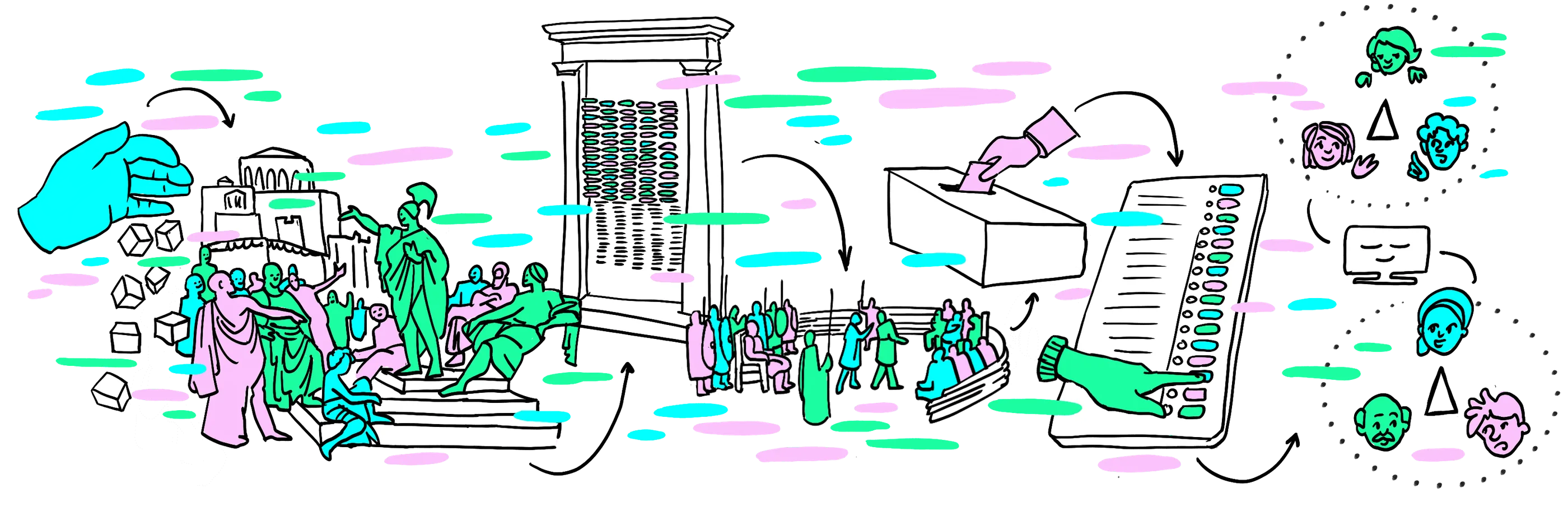
Deliberatie is het proces van eerlijke, openhartige, vaak lastige gesprekken voeren om tot uitkomsten te komen die ertoe doen en tot uitvoerbare besluiten waar een maximaal aantal stakeholders mee kan instemmen.
De meeste mensen hebben weleens een vorm van deliberatie meegemaakt. Het is vaak de standaardmanier van collectief beslissen wanneer er geen impliciete hiërarchie is. Macht delegeert, gelijken delibereren.
Macht delegeert, gelijken delibereren.
Bij dembrane geloven we dat deliberatie de standaardmanier is waarop mensen samenwerken en beslissen, maar naarmate samenlevingen groter en complexer werden, moesten we manieren bedenken om deliberatie op te schalen. We probeerden het door alleen de dorpsoudsten te laten delibereren, of door vertegenwoordigers te kiezen. Met die technieken zijn we behoorlijk ver gekomen, maar ik denk dat we allemaal wel zien dat we op het punt staan dat we echt grote, openhartige gesprekken zouden moeten voeren over hoe we met elkaar verdergaan, terwijl we in plaats daarvan vastzitten in oude routines van machtsspelletjes en achterkamertjesgeroddel. Deliberatie is vastgelopen en we hebben nieuwe manieren nodig om de energie terug te brengen.
Gelukkig zijn er een paar geweldige mensen op deze wereld die hun loopbaan hebben gewijd aan het helpen van ons allemaal om terug te keren naar ouderwetse, bottom-up deliberatie. Een paar jaar geleden besloten de oprichters van dembrane om deze mensen zo goed mogelijk te helpen, en dembrane was het resultaat.
Mensen hebben uiteenlopende opvattingen over wat goede deliberatie is. We wisten dat als we iets zouden bouwen met te veel uitgesproken keuzes, we niemand blij zouden maken. In plaats daarvan lieten we ons inspireren door Lego: als we bouwstenen konden aanbieden waaruit procesontwerpers, begeleiders en hosts van deliberatie de blokken konden kiezen die ze nodig hadden, dan konden we iets maken dat de breedste reeks processen kon helpen.
Nu we een set bouwstenen hebben gemaakt, merken we dat ze verschillende lagen van waarde mogelijk maken. Van basaal vastleggen en datahygiëne tot de meest experimentele functies: procesontwerpers kunnen kiezen wat ze nodig hebben om hun processen kracht bij te zetten, zonder vast te zitten aan één manier van werken.
Laag 1: VASTLEGGEN
Vastleggen. Terugblikken op een heel proces.
De eerste laag van waarde is die als archiefsysteem. Een feedbackloop om terug te blikken op een heel deliberatief proces.
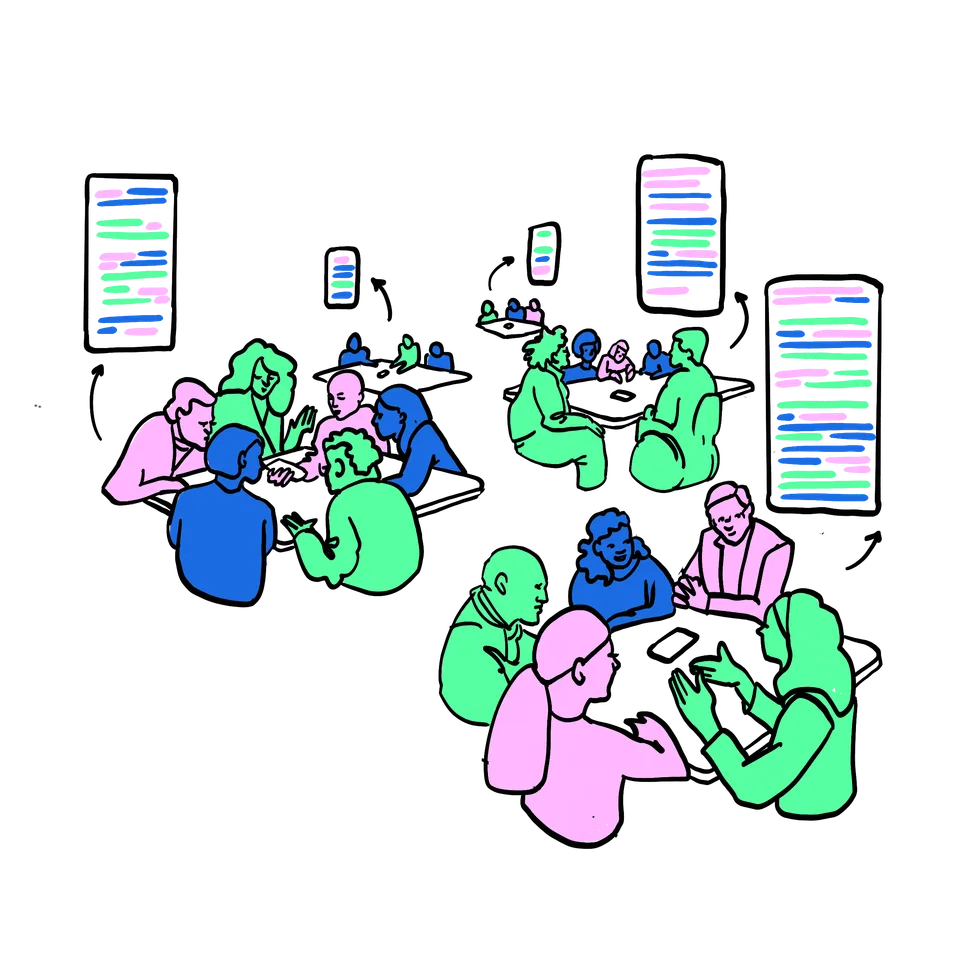
Veel deliberatieprocessen die we observeerden gebruikten handgeschreven notities, post-its, whiteboards en flip-overs om een deel vast te leggen van wat de deelnemers zeiden. Dat is prima, maar we hoorden veel mensen vragen "Waar zijn de post-its van de vorige sessie?" of "O! Ik weet nog dat iemand een geweldige uitspraak had daarover, maar ik weet niet meer wat het was..." of "Kun jij het handschrift op deze post-it lezen?"
In veel deliberatieve processen was er simpelweg geen archiefsysteem. En als auditors en opdrachtgevers langskwamen en vroegen hoe ze zeker konden weten dat de uitkomsten en aanbevelingen van de deelnemers kwamen, bleven de procesontwerpers het antwoord schuldig. Een stapel posters uit de achterbak van een auto vissen terwijl de post-its wegwaaien in de wind, wekt niet bepaald vertrouwen.
Wat konden ze anders doen? Ze konden proberen woordelijk uit te typen wat iedereen zei, maar dat is een vak apart. Ze zouden notulisten aan elke tafel nodig hebben en die zijn al overvraagd.
Ze konden een hoop microfoons kopen en elk gesprek opnemen, maar dan moesten ze een stapel microfoons in de auto bewaren, en iemand moest zich druk maken om ze opgeladen te houden, de SD-kaarten te legen, plus waar leeft de data eigenlijk? Hoe sla je het veilig op? Wat als er meer tafels dan microfoons zijn?
Je zou mensen kunnen vragen de gesprekken op hun telefoon op te nemen, maar dan moet je iedereen zover krijgen om de bestanden naar je over te zetten. Heb je weleens geprobeerd om een uur audio van een stapel telefoons naar een soort cloudopslag te uploaden? Dat is niet bepaald makkelijk. En wat als ze de audio op hun toestel houden? Dat is een datalek.
En toestemmingsformulieren? Transcriptie?
We hadden alle denkbare varianten gezien van mensen die een soort archiefsysteem probeerden op te zetten voor wat er werd gezegd. Geen enkele was handig. De standaard was het absolute minimum. Niet ideaal.
We bouwden dembrane zodat mensen een willekeurig aantal telefoons in gespreksarchivarissen kunnen veranderen door simpelweg een QR-code te scannen. Het gesprek wordt niet op het toestel opgeslagen, maar meteen verzonden naar onze veilige cloudomgeving, waar het met geavanceerde modellen wordt getranscribeerd en op versleutelde servers wordt bewaard, waar procesontwerpers, hosts en auditors het kunnen inzien en kunnen nagaan wat er is gezegd wanneer ze maar willen. Nu kunnen procesontwerpers besluiten om de audio te bewaren of de gesprekken te anonimiseren en alleen geredigeerde transcripties te bewaren. Toestemmingsformulieren en bewaartermijnen worden allemaal centraal beheerd en het beleid is afdwingbaar.
Aan het deliberatieproces zelf hoefde niets te veranderen. Eén keer een QR-code scannen per gesprek, de telefoon ligt verder gewoon aan de kant. Op dit moment hebben we honderden processen geholpen om van handgeschreven notities naar een volledig compliant archiefsysteem te gaan.
Dat is laag 1.
Laag 2: VRAGEN
Wat dachten we ook alweer? Wat hebben we gemist? Terugblikken op een sessie.
Als je alle gesprekken in een deliberatie opneemt, wordt een vanzelfsprekende vraag: wat kun je met al die informatie doen?
Bevindingen samenvoegen en ontdubbelen over gesprekken heen
In de begindagen van dembrane, terug in 2023, hadden we een pilotklant die een deliberatie hield met zo'n 90 stakeholders, in samenwerking met het team voor stakeholderbetrokkenheid en participatie van een grote bank. Ze hadden begeleiders en notulisten aan elke tafel, en na afloop legden ze hun notities naast elkaar om een rapport op te stellen dat ze konden teruggeven aan de opdrachtgever. In die tijd namen we gesprekken nog op met een koffer vol microfoons, en rende Jorim door de zaal om SD-kaarten te wisselen en alle gesprekken op zijn laptop te transcriberen.
Met een dataverwerkingspijplijn aangedreven door GPT-4 hadden we een eerste conceptrapport af nog voor de afsluitende plenaire sessie.
De zaal las de aanbevelingen en de onderbouwende citaten, en we hoorden kleine kreetjes van "Hé, dat zei ik!" en "Hebben jullie dat in jullie groep ook besproken?!" De klant was blij, en een paar weken later vroegen we bij de bank na hoeveel voortgang ze hadden geboekt met hun rapport. Het team had besloten het niet te schrijven, omdat de notulisten en begeleiders het er allemaal over eens waren dat de uitkomsten van dembrane volstonden.
“Hé! Dat zei ik!”
Het is niet onmogelijk om collectieve uitkomsten op te stellen zonder dembrane, maar elk proces dat we tegenkwamen liep tegen eenzelfde knelpunt aan. Aan één tafel kun je deelnemers deliberatief aanbevelingen laten formuleren, maar hoe breng je alle verschillende aanbevelingen van alle verschillende tafels bij elkaar?
Vaak worden resultaten na afloop samengevoegd, wat het momentum en het eigenaarschap van deelnemers om zeep helpt. Andere keren komen begeleiders tussen sessies door bijeen om de aanbevelingen te herstructureren tot een definitieve lijst. Weer andere keren wordt één deelnemer per tafel gevraagd om de uitkomsten van zijn groep met de hele groep te delen (met wisselend succes).
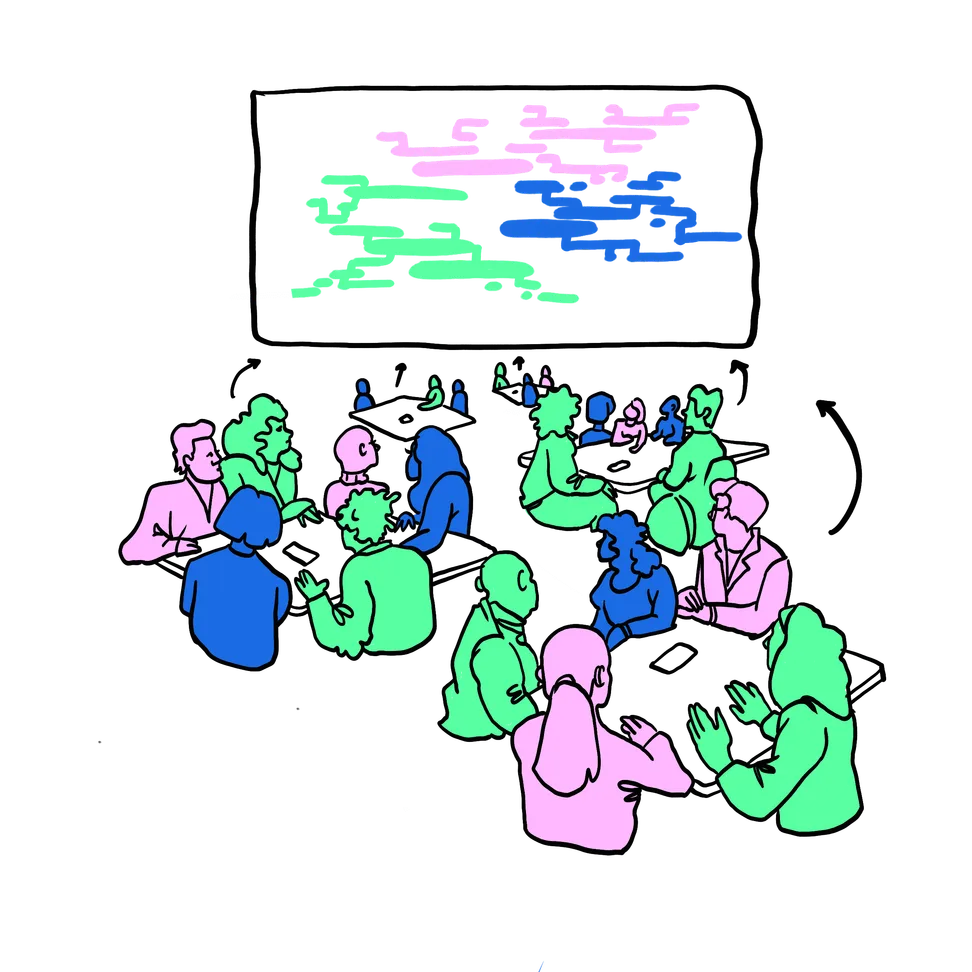
Met dembrane wordt het mogelijk om een ontdubbelde lijst met uitkomsten te vragen op basis van de transcripties van elke tafel. Niet als vervanging van het proces van opstellen, maar door de concepten van meerdere tafels tegelijk samen te voegen tot een totaalbeeld. Dit machinaal gegenereerde totaalbeeld heeft natuurlijk validatie nodig, maar de deelnemers zijn nog in de zaal: zodra ze het dubbelchecken en akkoord geven, is het proces opnieuw empirisch geworteld in hun ervaring.
Sinds dat eerste rapport in 2023 is dembrane gebruikt om voorlopige uitkomsten te genereren in honderden processen. We hebben veel geleerd!
Het punt is niet om een taalmodel een hoop transcripties te voeren, er een willekeurige vraag aan te stellen en het antwoord te presenteren als een soort orakel; zo verliezen deelnemers het vertrouwen in het proces. Het punt is om het best mogelijke deliberatieve proces te doen dat je kunt, en dembrane te vragen voor de laatste stap: het samenvoegen en ontdubbelen van de bevindingen.
Op zoek naar blinde vlekken
Een ander waardevol patroon is dembrane gebruiken om te vragen: wat hebben we gemist? Na een deliberatie over mobiliteit bij de gemeente 's-Hertogenbosch vroegen we dembrane wat de gemeente had gemist. dembrane antwoordde dat de discussies vaak de behoeften van bezorgers en hulpdiensten noemden, maar dat die mensen er niet echt bij waren: ze werden gebruikt als retorisch middel in plaats van vertegenwoordigd. De procesontwerpers: "O, wow, dat is zo waar, we moeten ook de dingen vanuit hun perspectief begrijpen."
Zolang de output van dembrane wordt behandeld met de scepsis die het verdient, als een eerste concept dat aan maximale toetsing onderhevig is, gaan deelnemers juist meer eigenaarschap over de uitkomst voelen en meer vertrouwen in het proces krijgen, niet minder. Het extra voordeel van snelheid betekent dat processen kunnen vasthouden aan een onderschatte bron: momentum.
Laag 3: VERIFIËREN
Toch nog iets gemist: terugblikken op een gesprek.
Terwijl we dembrane verder uitbouwden en het makkelijker werd om gesprekken op te nemen en collectieve aanbevelingen op te stellen, beseften we hoe belangrijk feedbackloops waren voor het hele proces van deliberatie.
In veel sessies merkten we dat gesprekken heel lang konden worden, dat ze veel kwesties tegelijk aanstipten en heen en weer slingerden tussen denken in grote lijnen en de kleine details. Een ervaren begeleider kon achteraf een compleet overzicht van de discussie geven, of volledig aanwezig en emotioneel afgestemd zijn op de dynamiek, maar allebei tegelijk doen was ongelooflijk inspannend.
Zo'n transcriptie zomaar in een archiefsysteem droppen, of er aanbevelingen mee genereren, vlakt soms juist datgene af wat het gesprek de moeite waard maakte. Het moment waarop iemand twee dingen verbindt die niemand anders had verbonden, wordt gladgestreken tot een net opsommingsteken, en de verbinding, de hele reden waarom het gesprek ertoe deed, gaat verloren.
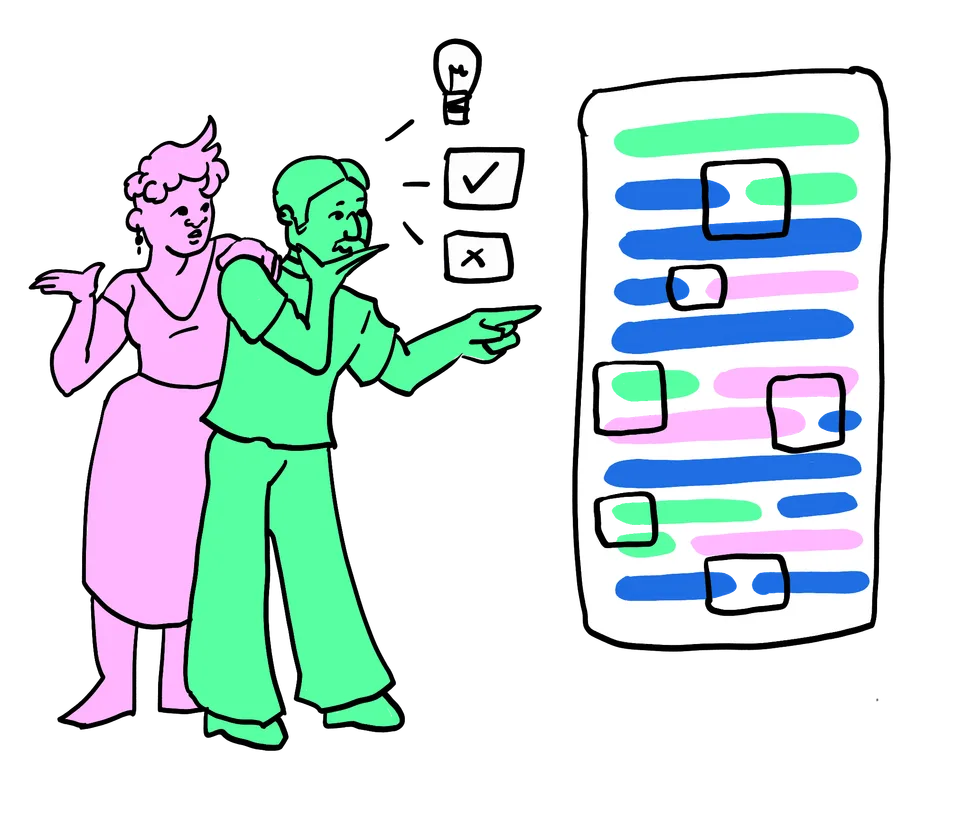
Dus bouwden we een feedbackloop die zich sluit terwijl het gesprek nog warm is. We noemen het Verifiëren. Nadat mensen aan een tafel hebben gepraat, stelt dembrane een samenvatting op en geeft die meteen terug aan de groep, en zij zetten er druk op. Niet in een rapport weken later dat niemand leest, maar daar in de zaal, terwijl ze nog precies weten wat ze bedoelden.
In een vredesberaad in Noord-Ierland las een deelnemer de samenvatting die zijn tafel had gekregen en zei:
“Verslaving hangt samen met trauma. Trauma hangt samen met de Troubles. De Troubles hangen samen met sektarisme, racisme, homofobie, geweld tegen vrouwen. Dat zag ik niet terug in de AI-samenvatting.”
dembrane had de onderwerpen wel opgepikt, maar de rode draad die er doorheen liep had het gemist. Voor de deelnemer was die draad de hele kern. Doordat Verifiëren de samenvatting terug voor de groep legde terwijl het gesprek nog gaande was, werd de kritiek vastgelegd, en konden de hosts in real time bijsturen: weg van de traditionele thematafels op dag twee, de tafel "Mobiliteit" en de tafel "Voedsel", richting de hogere vraag waar de deelnemers eigenlijk naar reikten, zoals hoe het werk van het prioriteren van middelen zelf opnieuw ontworpen zou moeten worden in een onderling verbonden systeem.
De reden dat iedereen kon instemmen met de resultaten van dag twee, was dat het systeem was gecorrigeerd. Verifiëren houdt de deelnemers als bron van waarheid en zorgt ervoor dat de deelnemers het gezag over hun eigen woorden behouden. dembrane vraagt "heb ik dit goed begrepen?"; de mensen aan tafel beslissen of ze terugduwen of niet. De samenvatting die wordt bewaard, is er een die zij hebben gecorrigeerd en waar ze achter staan.
Laag 4: VERKENNEN
Een scherpe vraag. Vooruitkijken, binnen het gesprek.
Elke laag tot nu toe kijkt terug. VASTLEGGEN omvat het hele proces; VRAGEN en VERIFIËREN reiken terug over een sessie of een enkel gesprek. VERKENNEN is de enige die vooruitkijkt: een enkele vraag, ingebracht in een gesprek terwijl het plaatsvindt.
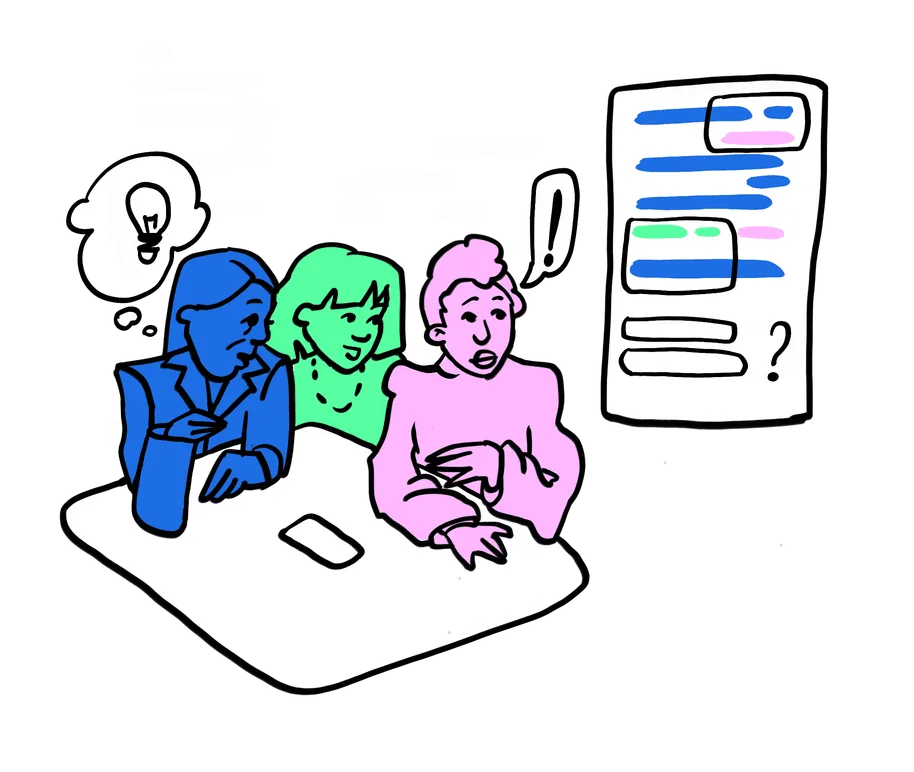
Terwijl mensen praten, luistert dembrane naar de wrijving in dat waar ze omheen cirkelen, en biedt het, wanneer erom gevraagd wordt, één socratische vraag aan om het gesprek een laag dieper te brengen.
Op een congres voor bedrijven in 2025 probeerden we het uit met een zaal vol commissarissen en jong talent. Ze gingen in tweetallen op pad, wandelden, namen hun gesprekken op, en konden op verkennen drukken wanneer ze wilden. Aan zichzelf overgelaten deden veel van deze gesprekken wat gesprekken tussen succesvolle mensen vaak doen: ze bleven in de hoogte hangen, vloeiend in de taal van stakeholders en systemen en goed bestuur, een beetje abstract, een beetje berustend.
Dan landde er een vraag, en kon je de hoogte in real time zien dalen.
Eén tweetal had vlot zitten praten over "uit de bubbel breken en maatschappelijke breedte verankeren in het DNA van bestuur." Verkennen vroeg hun wat alleen een onpersoonlijke agent zonder besef van de machtsverhoudingen kon vragen: wat het werkelijk zou kosten om hun eigen bubbel open te breken voordat ze die van iemand anders zouden herontwerpen. Een van hen stopte met het opvoeren van een rol: ze zei dat ze zich voortdurend gevangen voelt in haar bubbel, dat haar eigen kinderen haar uitlachen als ze zegt dat ze vóór diversiteit is, dat ze in een welgesteld deel van Amsterdam woont en dat haar hele vriendenkring er precies zo uitziet als zij.
Het deed steeds opnieuw hetzelfde. Een verheven vraag over het bredere belang boven kortetermijnwinst stellen, kreeg een por van Verkennen, en het gesprek werd concreet: zouden ze bereid zijn om niet drie keer per jaar op vakantie te gaan, om niet de keuken te verbouwen maar in plaats daarvan in een moestuin te investeren? Een andere vraag vroeg direct of iemand die aanwezig was zich ooit echt kwetsbaar had opgesteld binnen een formele leidersrol: iemand pakte de uitdaging op ("Ik heb er een, zal ik beginnen?") en vertelde een echt verhaal.
dembrane kan de perspectieven van de mensen in de zaal niet vervangen (en dat is met opzet). Geef één gesprek honderd keer aan dembrane en je krijgt ongeveer dezelfde vraag terug; geef het aan honderd verschillende mensen en je krijgt honderd verschillende reacties. De machine is goed in het vinden van de volgende laag van een gesprek dat al rijk is. Het kan geen ontbrekend persoon aan tafel zetten, en het denkt geen gedachte die de groep niet al half vasthoudt. Het is aan procesontwerpers om de dag zo vorm te geven dat dembrane scherpt wat de mensen te zeggen hebben, in plaats van andersom.
Laag 0: DELEN
Een commons voor deliberatie. Kijken over elk proces heen, over jaren. (Een uitnodiging)
Er is nog één loop, en die draait precies de andere kant op dan alle andere: niet strakker en sneller, maar breder en trager. Hij ligt onder alles, noem het laag nul, en we hebben hem nog niet gebouwd.
Elk proces dat zichzelf met dembrane vastlegt, bouwt een klein, zorgvuldig archief van hoe één echte deliberatie werkelijk verliep. Stel je die archieven voor, opt-in en geanonimiseerd, gebundeld in een commons zodat het veld van deliberatie iets over zichzelf kan leren.
Om te vergelijken hoe deliberatie werkt in het ene land en het andere.
Om te zien hoe een methode zich verspreidt.
Om onderzoekers echte maatstaven te laten bouwen en testen voor wat een proces goed maakt.
Verifiëren geeft al een hint waarom dit zou kunnen werken. Elke keer dat een deelnemer een samenvatting corrigeert, houden we twee dingen naast elkaar over: wat de machine eerst begreep, en wat een mens zei dat eraan mankeerde. Dat is bijna precies het materiaal dat je nodig zou hebben om deliberatie-instrumenten te maken die echt beter worden in de loop van de tijd, met echte deliberatie als bron van waarheid.
Dit is het langste spel, en het beïnvloedt je proces het minst. Het doet niets in de zaal, en het gebeurt alleen ooit als een proces ervoor kiest om mee te doen. We bouwen ernaartoe, en we zijn op zoek naar partners die graag zouden delen wat ze leren. Eén vraag laten we voor jou:
als jouw proces elk proces dat erna komt zou kunnen helpen, wat zou je dan bereid zijn te delen?
Hoe ga jij het gebruiken?
Dat zijn de bouwstenen tot nu toe!
VASTLEGGEN, zodat een proces een geheugen heeft en kan laten zien waar zijn conclusies vandaan kwamen.
VRAGEN, om te concipiëren en herzien en zichtbaar te maken wat een sessie heeft gemist.
VERIFIËREN, om deelnemers de samenvatting te laten aanscherpen terwijl die nog warm is.
VERKENNEN, om een gesprek te verdiepen terwijl het plaatsvindt.
En, op een dag, DELEN: om jouw proces het veld te laten helpen evolueren.
Geen van alle is een manier om het lastige deel te omzeilen. De deliberatie blijft aan de mensen zelf om te doen; elke laag wordt evenzeer bepaald door wat hij met rust laat als door wat hij toevoegt. Zie het als bewust afzien van gemak. "Ontwerpen voor wrijving", zou je kunnen zeggen.
Maar we zijn benieuwd: waar zou in het proces dat jij bouwt een archiefsysteem veranderen wat mogelijk is? Waar zou een tweede concept, een live correctie of een scherpere vraag zijn plek verdienen? Zelfs alleen de gesprekken opnemen kan enorm waardevol zijn, en als je er klaar voor bent en de context het toelaat, kun je misschien vragen, of verkennen, of verifiëren. Neem wat helpt en laat de rest. Vertel ons daarna waar het hielp en wat beter kan.