
Ethical whitepaper
dembrane is launching an initiative to maximise user agency in our tools, accelerating a move away from naively implementing large frontier AI models. While overusing these powerful models might be easier, it doesn't align with our goal of empowering people with simple and lovable tools.
Concretely, this means we strive to:
Develop AI components that put users in control, with clear boundaries around AI-generated content. Users will have the ability to accept, reject, or modify AI suggestions.
Implement transparency measures so users understand when they are interacting with AI and how it is enhancing their experience. No hidden AI, minimal black boxes.
Rigorously test for biases and blind spots in our AI applications, and proactively seek out diverse perspectives in our data and user feedback loops.
Prioritise AI applications that augment human creativity and decision-making rather than automating it away. Our tools should require active human engagement and critical thinking.
Continuously monitor and assess the impacts of our AI systems in the real world, and be willing to iterate and adjust our approach as needed for more ethical outcomes.
This blog post serves as an ethical white paper, outlining our position and commitment to investing in human-centred “low AI” tools. We believe this approach, though more challenging in the short term, will yield more empowering and ethically aligned technologies in the long run. Our goal is to be leaders in responsible AI innovation that genuinely benefits society.
Attending to Complexity and Pioneering “Low AI” for Ethical Collective Intelligence
As artificial intelligence (AI) continues to advance at a rapid pace, governments, businesses, and individuals are grappling with the implications. The Dutch government's recent actions, embracing generative AI while simultaneously preparing for potential regulation, highlight the complex ethical considerations surrounding this transformative technology. At dembrane, we recognise the need to navigate this uncharted territory with care, and as a team, we often draw upon the wisdom of ethical luminaries to guide our approach.
Context
An estimated three quarters of Dutch municipalities use ChatGPT, but last November it was leaked that the Dutch national government was preparing a ban, preventing civil servants and their suppliers from using text generators like ChatGPT due to ethical considerations such as breaches of privacy and copyright. As an AI company committed to serving the public sector, this has had a tangible impact on our business. The public sphere is grappling with the implications of AI, and we find ourselves at a critical juncture.
The Dutch government's stance on AI reflects a fundamental contradiction that is emblematic of the broader challenges faced by governments worldwide. On the one hand, the allure of AI's transformative power is undeniable, promising to streamline processes, uncover new insights, and drive innovation across sectors.
On the other hand, the Dutch government is considering a ban on the use of generative AI by civil servants. This proposed restriction stems from legitimate concerns about the ethical implications of AI, including issues of privacy, bias, transparency, and accountability. The leaked preparations for this ban reveal a deep unease about the potential risks and unintended consequences of deploying AI in the public sector.
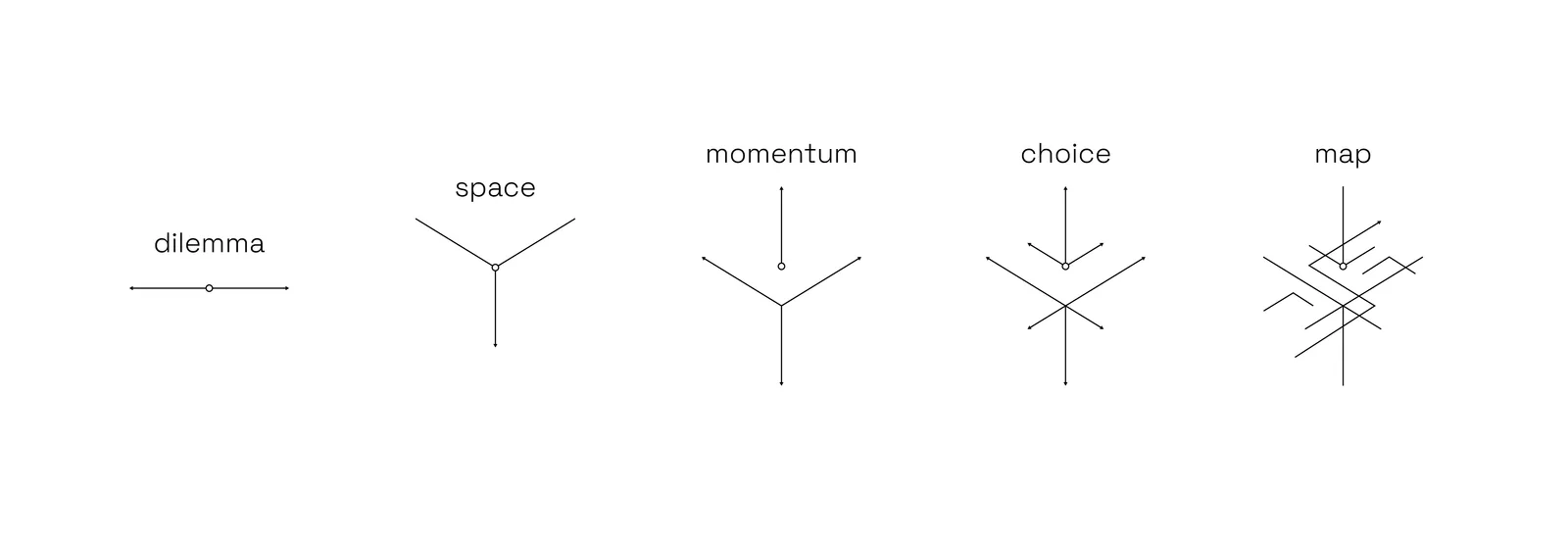
At first glance, these two stances appear to be in direct opposition, reflecting a simplistic “AI vs. No AI” narrative. It's tempting to frame the debate as a binary choice between embracing AI wholeheartedly or rejecting it entirely. However, the reality is far more nuanced and complex.
“Only if we also invest more in AI innovations will we be in a position to compete and to set the course for the appropriate and promising development of this technology” - Minister of Economic Affairs and Climate Policy Micky Adriaansens

The Dutch government's apparent contradiction highlights the difficult balancing act that governments must navigate in the era of AI. They must find a way to harness the benefits of AI while simultaneously mitigating its risks and ensuring that its development and deployment align with societal values and priorities. This is no easy task, as it requires grappling with a host of complex ethical, social, and political considerations.
Moreover, the government's stance reflects the broader societal tensions surrounding AI. On one side, there is a growing public enthusiasm for the potential of AI to transform our lives for the better. Many people are excited about the prospect of more efficient services, personalised experiences, and data-driven decision-making. On the other side, there is a rising tide of concern about the potential downsides of AI, including job displacement, privacy violations, and the amplification of existing biases and inequalities, and potentially creating new ones.
“Bias is a problem, even if it suits me.”
A short story about the challenge of bias, wherever it arises
While analysing the results of a particular participatory process, I had my first experience with AI bias. I had asked for a summary of a set of documents, and the answer I was presented with was perfectly reasonable. Exactly what I asked for, even including the perspectives of minorities and presenting a small conflict between two stakeholder groups.
It felt too polished. I asked which kinds of stakeholders would feel unseen, perhaps even offended by the summary. The AI proceeded to tell me:
Small business owners
People living in the suburbs
Frequent car drivers
Emergency services
I do not belong to any of those groups. Blinded by my own bias, I had almost submitted the report without including their crucial perspectives.
I now saw “in the wild” how the development and deployment of AI is not a neutral process, but one that can both perpetuate and amplify existing inequalities and discrimination, as well as create new biases. This bias was not intentional or malicious, but rather a reflection of the values embedded in the data and algorithms that powered the AI system. It was a stark reminder that AI is not a panacea, but a powerful tool that must be wielded with care and responsibility.
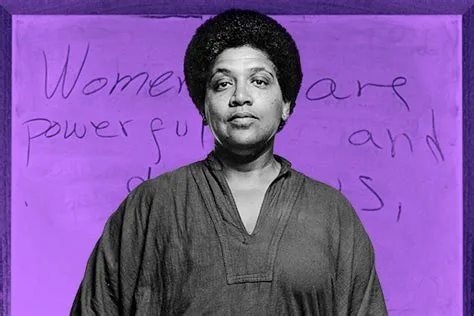
This experience underscored the importance of Audre Lorde's perspectives on intersectionality and the need to incorporate diverse perspectives in the development of AI systems. Lorde argues that our identities and experiences are not singular or separable, but rather intersect and interact in complex ways. By extension, any attempt to develop AI systems that are truly inclusive and equitable must take into account the full range of human diversity and experience. Intersectionality cannot be reduced to sexism, racism, classism or ableism. Of course these aspects should be identified and dealt with, but for every correction in the AI's ethical compass, there will be a group that is left out. A perspective blinded, a good idea or guiding requirement lost.
Incorporating intersectional ideas into AI development is a daunting but noble challenge. It requires grappling with the deep-seated biases and power imbalances that permeate our society and our data. It demands a willingness to engage with uncomfortable truths and to challenge the status quo. It necessitates a fundamental rethinking of how we design, develop, and deploy AI systems.
It is not our differences that divide us. It is our inability to recognize, accept, and celebrate those differences. - Audre Lorde
Staying with the trouble

When designing, developing and deploying AI systems in particular, the work of Donna Haraway becomes particularly relevant. Haraway offers a way to broaden our perspective beyond the narrow confines of technical expertise and dominant paradigms of separation. By blurring the boundaries between human and machine, nature and culture, Haraway challenges us to consider the complex web of relationships and interdependencies that shape our world.
Technology is not neutral. We're inside of what we make, and it's inside of us. We're living in a world of connections — and it matters which ones get made and unmade. - Donna Haraway

Haraway's call to “stay with the trouble” and “muddle through” is a powerful reminder that the goal of AI development should not be to achieve some mythical state of perfection or neutrality, but rather to engage with the messy realities of the world as it is. It's about getting our hands dirty, making mistakes, and learning from them. It's about embracing the uncertainty and ambiguity that comes with charting new territory.
This perspective is deeply resonant with Edgar Morin's paradigm of complexity. Morin argues that the dominant paradigm of simplification, which seeks to reduce the world to simple, deterministic models, is fundamentally inadequate for understanding the world in all its richness and diversity. Instead, he advocates for a paradigm of complexity that embraces uncertainty, contradiction, and emergence as essential features of reality. For Morin, engaging in complex thought is not just an intellectual exercise, but an ethical imperative. It requires us to resist the temptation of easy answers and quick fixes, and to grapple with the full complexity of the challenges we face. It demands a willingness to consider multiple perspectives, to engage in dialogue and debate, and to remain open to new ideas and possibilities.
The simple is no more than a moment. An aspect among several complexities. - Edgar Morin
Bringing together the insights of Lorde, Haraway, and Morin, we can begin to envision a new approach to AI development that is grounded in a deep commitment to justice, inclusion, and complexity. This approach would reject the false dichotomy of “AI vs. No AI” and instead seek to transform the terms of the debate. It would recognise that the development of AI is not a zero-sum game, but a collective endeavour that requires the participation and input of all stakeholders.
“The complex […] calls for and provides a means of self-criticism… It carries truths that are biodegradable…” - Edgar Morin

Low AI

At dembrane, we are inspired by this vision of a more participatory and inclusive approach to AI development. We believe that by designing tools and platforms that facilitate collective intelligence and decision-making, we can harness the power of AI to enhance rather than replace human agency and creativity.
To this end, we will pioneer “low AI”: using AI minimally and strategically to increase the accessibility, affordability, and reach of participatory processes, without abdicating responsibility to a black box. We aim to create systems that amplify human capacities for complex thought and moral reasoning, rather than automating them away.
Central to this approach is the philosophy of Iris Murdoch, who emphasises the importance of attention and perception in moral life. Murdoch argues that the key to ethical behaviour is not the application of abstract principles or rules, but rather the cultivation of a particular quality of attention that is characterised by openness, empathy, and a willingness to see the world as it really is. Looking back at the moment where I was confronted with AI bias, we see the value of this perspective. It was by paying “just and loving attention” and asking the AI for another perspective that the full range of voices was included and the final output of the AI improved.
What counteracts [fantasy, blinding self-centred aims and images] is attention to reality inspired by, consisting of, love. - Iris Murdoch

By designing tools that facilitate or elevate human-to-human attention and interaction, we believe that we can create spaces for the kind of moral work that Murdoch advocates. Our goal is not to provide answers or solutions, but to enable individuals and communities to engage with the subtleties and particularities of moral experience, and to develop their own capacities for ethical reflection and action.
What if we fail?

Of course, the development of any technology brings with it the risk of bad actors and unintended consequences. We are acutely aware of the potential for AI to be used in ways that are harmful or oppressive, and we are committed to designing systems that are resilient and adaptable in the face of these challenges. As we will see, the point is not to focus on bad actors, building systems that minimise the need for trust or cooperation, but to embrace the idea, in the words of Rutger Bregman, that most people are good - “meeste mensen deugen”.
Here, the work of Rosi Braidotti offers a valuable perspective. Braidotti's vision of a life-affirming posthumanism recognises the inherent complexity and unpredictability of the world, but also the capacity of life (all life, not just humans) to flourish and adapt in the face of adversity. By putting lived agency and creativity at the heart of our systems, we believe that we can tap into this capacity and contribute to the ongoing evolution of AI in a positive and affirming direction.
In other words, humans – like all living entities – are drawn to perpetuate and structurally gravitate around positivity. - Rosi Braidotti

Ultimately, the path forward for our AI development is not a straightforward one. It will require ongoing engagement with clients, continuous experimentation, and shared learning. It will demand a willingness to stay with the trouble, to muddle through, and to be open to new possibilities and perspectives.
Potential and direction

At dembrane, we are committed to walking this path with humility, curiosity, and a deep sense of responsibility. We believe that by synthesising the insights of philosophers like Lorde, Haraway, Morin, Murdoch, and Braidotti, we can develop a more nuanced and context-sensitive approach to AI ethics that embraces complexity, empowers individuals and communities, and attends to the nuances of lived experience.
Our “low AI” approach is a testament to this commitment. By using AI minimally and strategically, we will be able to create systems that elevate beautifully human things - sharing complex thoughts and philosophies in playful interactions in the service of participatory decision-making. We recognise that this is not a panacea, but rather a starting point for a broader conversation about the role of AI in our lives and in our society.
As we move forward, we remain dedicated to engaging with diverse stakeholders, learning from our mistakes, and adapting to new challenges and opportunities. We believe that by staying true to our values and our vision, we can make a meaningful contribution to the ongoing evolution of AI in a way that promotes justice, inclusion, and human flourishing.
In the end, the development of AI is not just a technical challenge, but a deeply human one. It requires us to grapple with fundamental questions about who we are, what we value, and what kind of world we want to create. It demands a willingness to engage in difficult conversations, to challenge our assumptions, and to remain open to new ways of thinking and being. We believe that by working together in a spirit of collaboration, creativity, and care, we can harness the power of AI to build a more just, equitable, and flourishing world.
Finally, I'd like to leave you with this.
Between saying and doing, many a pair of shoes is worn out. - Iris Murdoch
📨 Do you think we have made a mistake or would you like to comment? We are always open to that! Feel free to reach out at [email protected]
Sources
Dutch government presents vision on generative AI: government.nl
Leaked preparations for a ban on generative AI use by Dutch civil servants and their suppliers: volkskrant.nl
Edgar Morin, On Complexity: amazon.com
Rosi Braidotti, “The Ethics of Joy”, Posthuman Glossary: bloomsbury.com
Iris Murdoch, Stanford Encyclopedia of Philosophy: plato.stanford.edu
Audre Lorde, Your Silence Will Not Protect You: amazon.com
Rutger Bregman, De meeste mensen deugen: amazon.com
Donna Haraway, Staying with the Trouble: amazon.com
Written in collaboration with Claude 3 Opus: anthropic.com